
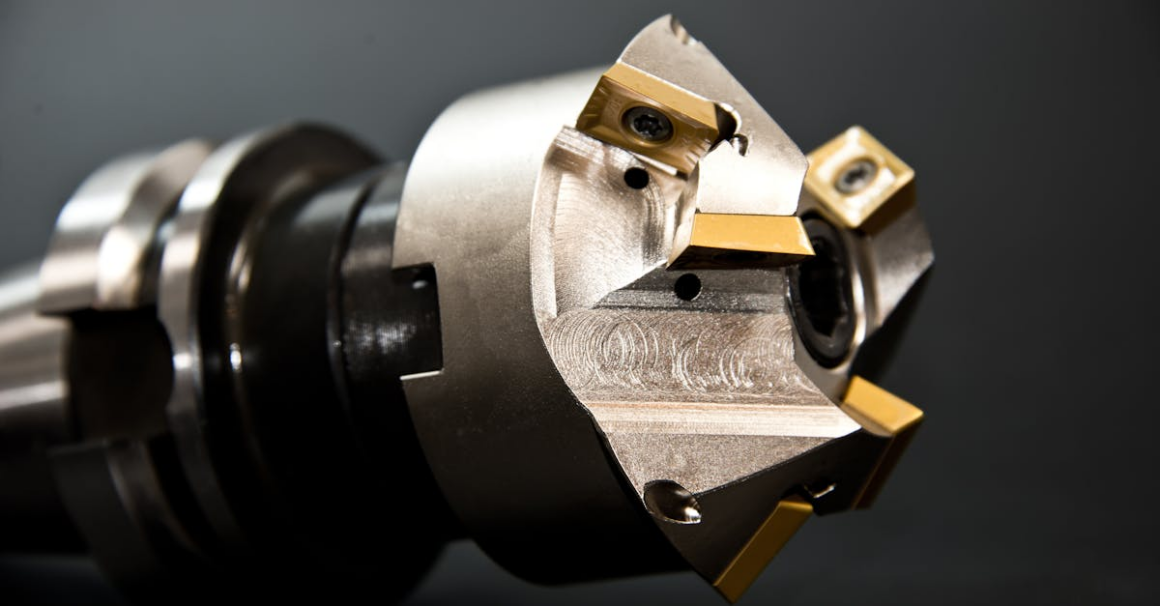
Modern manufacturing keeps raising the bar. Parts are more complex, tolerances are tighter, and the expectation for consistency across large production runs has never been higher. For companies building technically demanding components, the question is not whether to use CNC machining but how to find the right partner to do it well.
Challenges in Manufacturing Complex Parts
Producing complex parts through traditional machining is genuinely difficult. Tight tolerances leave almost no room for error, and even a small deviation can make a component unusable. In fields like aerospace or medical devices, where the performance of a finished part can directly affect safety, that margin is essentially zero.
Multi-axis parts add another layer of complexity. When a component needs cutting from five or six different angles, the workpiece has to be repositioned between each setup. Every repositioning is a new opportunity for misalignment, and with manual methods, small errors tend to compound rather than cancel out. A part that looks correct after the first few operations can fall out of spec by the time the final cuts are made.
Mass production makes all of this harder. Replicating a precise prototype ten thousand times, or a hundred thousand times, requires a level of process control that manual methods simply cannot sustain over long runs. Operator fatigue, tool wear, and minor inconsistencies in fixturing all accumulate over time, and without automation to compensate, quality drift becomes almost inevitable.
This is where suppliers like XTJ CNC have built a solid track record. In environments where reliability is not optional, working with a partner that has demonstrated consistent precision across complex, high-volume machining work makes a measurable difference.
Why CNC Machining Is the Preferred Solution
CNC machining replaced many manual processes not simply because it was faster, but because it delivered better outcomes in the areas that matter most. Computer-controlled movements follow the exact path defined in the program every single time. There is no fatigue, no gradual drift from extended operation, and no variation between shifts or operators.
The ability to produce complex geometries consistently is one of the clearest advantages. Contoured surfaces, internal channels, compound angles, and undercuts can all be defined in a program and executed with the same result across an entire production run. This gives design engineers far more freedom than traditional methods allowed, because features that were once too risky or expensive to machine reliably are now routine.
Material efficiency is another significant benefit. Because cuts are planned and optimized in advance through CAM software, material removal is controlled from the start. Scrap rates drop, cycle times become predictable, and production schedules are easier to plan around. For manufacturers working with expensive materials like titanium, Inconel, or medical-grade stainless steel, the cost savings from reduced waste add up quickly across large production volumes.
There is also the question of documentation. CNC machines log what they do, which makes it much easier to trace a problem back to its source if one arises. For industries with regulatory requirements around traceability, that built-in record-keeping is a practical advantage that goes beyond just machining quality.
Key Features of High-Quality CNC Machining Services
Not every CNC shop is equipped to handle genuinely complex work. The equipment matters, but so do the processes and systems built around it.
Multi-axis machining capability is one of the most important things to look for. Three-axis equipment works well for simpler parts but hits real limitations when components require undercuts or need features machined at compound angles. Five-axis and six-axis machines can handle these geometries in a single setup, which improves accuracy by reducing repositioning steps and also cuts down on overall cycle time.
Strong CAD/CAM integration is equally important. The path from a digital design file to a working machining program should be as direct as possible. Shops with solid CAD/CAM workflows can simulate the full machining process before touching any material, which means potential collisions, inefficient toolpaths, and design issues get caught early rather than during production.
Quality control systems are what tie everything together. Precision machining without rigorous inspection is only half the job. Reputable shops invest in coordinate measuring machines, surface measurement tools, and documented inspection procedures that verify every part against specification before it leaves the facility. Industry certifications like ISO 9001 or AS9100 are worth checking for, not because a certificate guarantees quality by itself, but because earning and maintaining those certifications requires the kind of process discipline that tends to show up in the actual work.
What to Look for in a CNC Manufacturing Partner
Choosing a machining partner is not just about collecting quotes and selecting the lowest price. For complex or ongoing production work, the relationship itself has a real impact on outcomes.
Engineering support is one of the first things to evaluate. A capable partner should be able to look at a design and raise practical concerns about features that will be difficult or expensive to machine. That kind of design for manufacturability input, offered before production starts, can prevent costly tooling changes or late-stage redesigns. A shop that simply accepts drawings without any technical dialogue is not adding as much value as one that engages with the engineering behind the part.
Production capacity and scalability deserve careful attention. A shop that performs well on prototype quantities may not have the equipment, staffing, or workflow to maintain quality at full production volumes. Before committing to a supplier, it is worth understanding their typical production loads, lead times, and how they manage unexpected demand increases.
Industry experience is harder to quantify but consistently matters in practice. A shop with fifteen years of experience machining aerospace components has encountered failure modes and edge cases that newer operations have simply not seen yet. When evaluating suppliers, checking what industries they have actually served and what types of parts they regularly produce is a more reliable signal than general capability claims. Buyers looking to evaluate a supplier's focus areas and technical range can visit their homepage as a starting point before reaching out.
Industry Applications of Precision CNC Machining
Precision CNC machining is used across a broad range of industries, though the requirements and expectations vary considerably from one sector to the next.
In automotive manufacturing, CNC machining handles engine components, transmission housings, suspension parts, brake system components, and custom production tooling. As the industry shifts toward electric vehicles, new demands are emerging around lightweight structural parts, battery enclosures, and thermal management components, all of which require the kind of tight dimensional control that CNC processes provide well.
Aerospace is one of the most demanding environments for machined parts. Aircraft structures, engine components, landing gear parts, and avionics housings all require tight tolerances and must be produced from materials that are often difficult to machine, including titanium alloys, high-temperature nickel alloys, and structural composites. The combination of material difficulty, tight specifications, and zero tolerance for field failures makes CNC machining the only practical production method for most aerospace components.
Medical device manufacturing sits in a similar position. Surgical instruments, orthopedic implants, diagnostic equipment housings, and custom fixturing all require accuracy that leaves very little room for variation. Beyond the technical requirements, regulatory frameworks in medical manufacturing require detailed documentation of production processes, which pairs naturally with the logging and inspection systems that well-run CNC shops already have in place.
About XTJ CNC
Business: XTJ CNC
Spokesperson: Hafiz Pan
Position: Director of Operations
Phone: +1 218 527 7419
Email: [email protected]
Location: 506 S Rangeline Rd, Carmel, IN 46032, USA
Website: http://xtjcnc.com
Google Maps Link: https://maps.app.goo.gl/2qt51vePKNrhhKZm6
Conclusion
CNC machining has become a foundation of modern manufacturing because it consistently delivers what complex part production actually demands: accuracy, repeatability, and the ability to scale without letting quality slip.
For manufacturers working with demanding geometries, tight tolerances, or difficult materials, the right machining partner contributes more than just equipment access. It contributes engineering knowledge, process discipline, and the kind of practical experience that only develops through years of solving real production problems. Bringing that partner into the conversation early, before drawings are finalized and before production pressures mount, is almost always the smarter approach.