
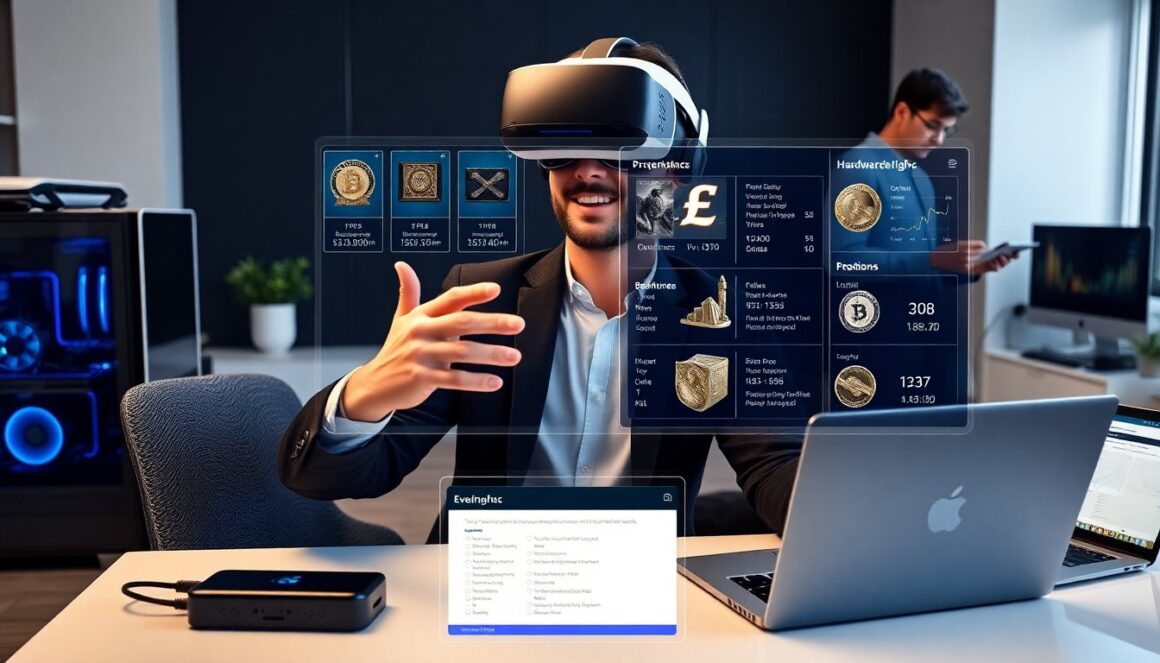
Evemgintghsc blends virtual reality ledger review game buy evemgintghsc with modern VR play. This piece explains what the product is and who it suits. Augmented reality quasar review purchase game emhgteresnigtc lists hardware demands, gameplay traits, ledger sync steps, privacy tips, and buying options. The text uses clear language and direct sentences. Readers get facts, steps, and a short buying checklist.
Key Takeaways
- Evemgintghsc is a VR game that integrates a blockchain ledger to give players true ownership and trading capabilities for in-game assets.
- The game requires mid-to-high-end VR hardware, including an eight-core CPU and RTX 3070-class GPU for optimal performance and smooth visuals.
- Gameplay combines mission-based progression, multiplayer trading hubs, and ledger-backed marketplaces to enhance replay value and social interaction.
- Ledger integration uses smart contracts to securely mint unique tokens and record ownership, reducing fraud while balancing transaction speed and traceability.
- To buy Evemgintghsc, verify hardware compatibility, ledger support, edition features, refund policies, and back up wallet seed phrases for security.
- Players should follow privacy best practices such as using hardware wallets, enabling two-factor authentication, and keeping seed phrases offline to protect their assets.
What Evemgintghsc Is And Who It’s For
Evemgintghsc is a VR title that links a blockchain ledger to in-game assets. Developers build it for players who value ownership and trade. The game mixes single-player missions and multiplayer markets. Gamers who own hardware and wallet devices will benefit most. Collectors who track asset provenance will value ledger features. Casual players will enjoy some content but may not use ledger tools. Reviewers note that Evemgintghsc targets tech-savvy users and traders more than pure story-focused players.
Visuals, Performance, And Hardware Requirements
Evemgintghsc shows high-fidelity textures and realistic lighting on current VR headsets. The game runs smoothly on mid-to-high-end GPUs when players meet recommended specs. Minimum specs include a recent six-core CPU, 16 GB RAM, and a GTX 1660-class GPU or equivalent. Recommended specs include an eight-core CPU, 32 GB RAM, and an RTX 3070-class GPU. The game supports 90–120 Hz refresh rates and foveated rendering on compatible headsets. Players using older GPUs will lower settings and maintain stable frame rates. Developers add patches to reduce frame drops in crowded market scenes.
Gameplay, Mechanics, And Replay Value
Evemgintghsc uses mission-based progression and open trading hubs. Players collect assets, upgrade gear, and trade on a ledger-backed marketplace. Combat uses physics-driven interactions and gesture controls. Crafting blends resource gathering with ledger-authenticated blueprints. Replay value comes from randomized missions, seasonal events, and evolving markets. Players who trade assets will revisit the game to follow price movements and to hunt rare drops. Solo players will replay missions to refine skills. Multiplayer raids and timed auctions add competitive pressure and social incentives.
How Ledger Integration Works In Evemgintghsc
Evemgintghsc links in-game items to a public ledger. The game mints unique tokens that represent items and records ownership. Smart contracts enforce transfers and marketplace rules. Players use wallet addresses to list, buy, and sell assets. The ledger stores provenance data, timestamps, and transaction IDs. The system reduces fraud by linking item history to the ledger. Developers design the integration to allow on-chain verification without forcing all actions on-chain. This approach balances speed and traceability.
Where To Buy, Pricing Options, And Purchase Checklist
Players can buy Evemgintghsc on major VR storefronts and on the official site. Price tiers include a standard edition, a deluxe edition with bonus assets, and a founder’s pack with early marketplace access. Subscription services may add monthly fees for marketplace perks. Third-party sellers may list keys, but buyers should verify seller reputations. The checklist below helps buyers avoid common issues:
- Verify platform compatibility. The buyer confirms headset and PC specs before purchase.
- Confirm ledger support. The buyer ensures their wallet model and firmware match the game requirements.
- Compare editions. The buyer checks which edition includes tokens, cosmetics, or auction passes.
- Check refund policy. The buyer reads the storefront terms for refunds tied to ledger transactions.
- Secure wallet backup. The buyer backs up seed phrases on a physical medium and stores them offline.
- Inspect community feedback. The buyer reads recent reviews for performance and marketplace stability.
Buyers who follow this checklist reduce risk and speed up setup.
Technical Flow: How The Ledger Syncs With The Game
The game queries a node API to verify token status and ownership. The player signs a transaction in a hardware wallet to move an asset. The game broadcasts metadata to a smart contract and waits for block confirmation. The player sees an in-game update when the ledger confirms the transfer. The client caches token metadata to speed display and to avoid repeated on-chain reads. The system retries failed broadcasts and shows clear status messages when confirmations take time.
Privacy, Security, And Best Practices For Ledger Use
Players should keep wallet seed phrases offline and private. They should use hardware wallets for high-value items and limit hot wallet use for small trades. They should verify contract addresses before approving transactions. Players should enable two-factor authentication on storefront accounts. They should review transaction gas estimates before signing. The game provides a watch-only mode to display asset holdings without requiring frequent signatures. Players should update firmware and game clients to receive security patches and to avoid known exploits.