
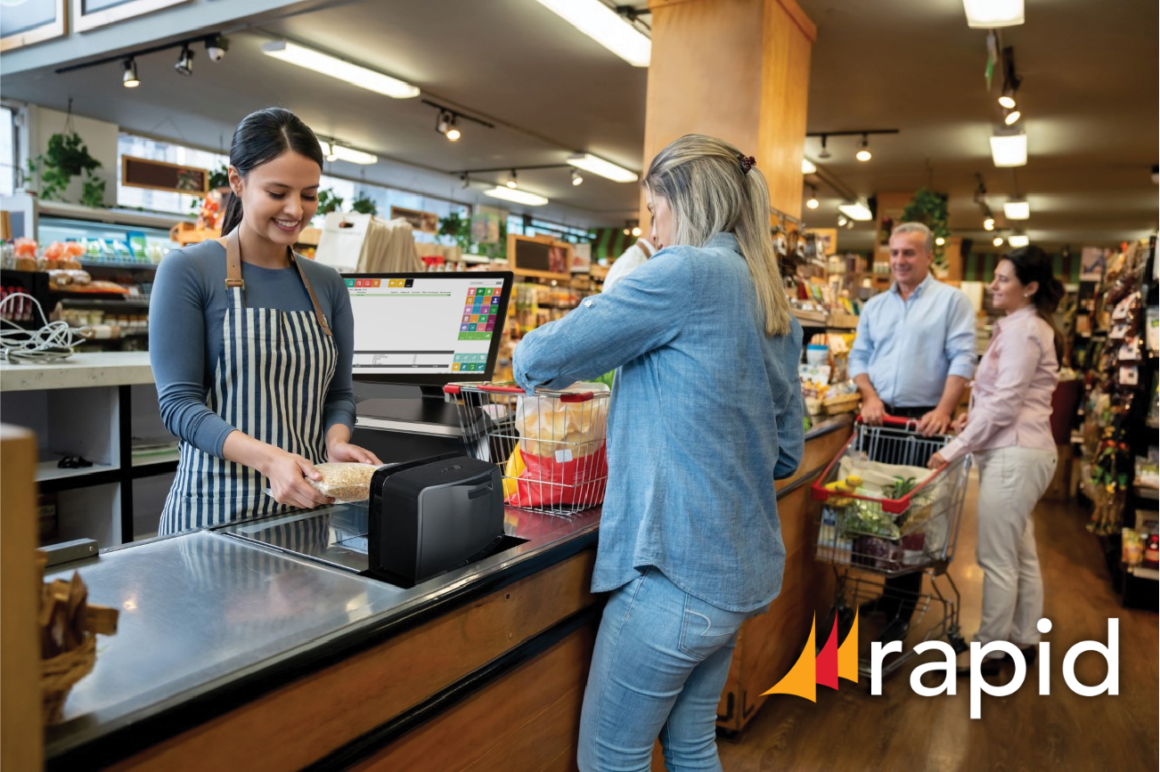
Grocery retail has become a real-time business. Stores need speed at checkout, accuracy on the shelf and clearer decisions behind the scenes, and smart POS systems are increasingly the layer that connects all three.
In U.S. grocery, where the industry employs 6.3 million people and average weekly household grocery spending stood at $170 as of February 2025, even small operational gains can scale quickly. That’s why more retailers are treating the checkout as the beginning of a broader operating system. In that environment, a grocery-focused POS system for the future feels less like an upgrade and more like core infrastructure, because it can connect the front end of the store to pricing, stock, ordering and reporting in one continuous flow.
The Checkout Has Become The Control Center
A modern grocery POS system does far more than record a sale. It can act as the command layer for thousands of SKUs, price updates, loyalty offers, weighted produce, deli transactions and location-wide reporting. That wider role is why grocers are paying more attention to POS software solutions that tie checkout activity directly to the rest of the business. When a system is built that way, it becomes easier to keep prices aligned, promotions accurate and replenishment decisions grounded in live conditions rather than yesterday’s assumptions.
That shift also fits the wider direction of retail. The National Retail Federation’s 2026 trends outlook says AI-driven retail is pushing harder into personalization, operational efficiency, inventory management and supply-chain decisions, all of which depend on clean, connected data. In grocery, the POS is often the fastest route to that data because it sees the store at the exact moment products move.
Grocery Needs Specialized Workflows
Grocery has always had edge-cases that generic retail software struggles with. Produce needs scale integration. Deli counters need weighted pricing that updates fast and accurately. Peak-hour service needs speed, because a queue that stalls for a few seconds at a time can shape the tone of the entire store. Add perishables, coupons, substitutions and constant stock movement, and it becomes clear why specialization wins.
Purpose-built systems are better suited to those demands because they reflect how grocery really works. They support retail automation tools that help staff move quickly while still keeping records clean. They make automation in grocery stores practical rather than theoretical, whether that means syncing price changes across lanes, reducing manual entry or helping teams manage exceptions without slowing everyone else down. The result is a calmer shop floor and a more reliable operating rhythm.
Data Turns Guesswork Into Precision
The biggest advance may be the move from reactive retail to predictive retail. With real-time inventory systems connected to checkout activity, stores can identify faster-moving lines, weaker categories and waste risks sooner. That is where data-driven retail starts to feel genuinely useful. A smart system can highlight when ordering patterns need to change, when a promotion is working harder than expected or when perishables are drifting toward spoilage rather than sale.
That broader logic now sits near the center of retail strategy. NRF’s 2026 outlook points to predictive analytics, better demand forecasting, stock optimization and waste reduction as key priorities as retailers try to protect margins and operate with more precision. For grocers, those priorities land directly on the POS layer, because every scanned basket adds another signal about what customers are buying, when they are buying it and how fast shelves are turning.
Better Staff Efficiency Starts With Better Systems
Smart grocery operations have optimization at their core. When a grocery POS system is tied into real-time inventory systems and other POS software solutions, staff who are spending less time on admin tasks like correcting prices or checking stock manually or have more room for the human elements of the operation, customer service being the obvious one, but also faster replenishment and smoother handovers between departments. This is exactly where retail automation tools start to have a visible effect on the shop floor. In practice, that means stores being run with more consistency during busy periods and teams having a clearer view of what needs attention next.
One Dashboard Changes Everything
For operators with multiple locations, centralized control may be the feature that unlocks the most value. Price changes, promotions, item creation and reporting all become easier when they can be managed from one place instead of being handled store by store. That is where intelligent retail systems earn their keep. They reduce friction for head office teams while giving local stores a cleaner, more consistent foundation.
You can see the same wider pattern across other connected environments, where cameras, sensors and software combine to produce live signals and instant responses. One example of that approach would be smart-city traffic and parking, where connected systems monitor real-time conditions and feed actionable decision-making tools. Grocery is moving in much the same direction. The best modern retail platforms gather live inputs, interpret them quickly and turn complexity into something staff can actually use.
The Future Runs Through The POS
In many ways, the future of retail technology in grocery looks less like one dramatic invention and more like tighter coordination. Stores already have the shelves, staff, suppliers and customer demand. What they need is stronger connection between those moving parts. A smart POS layer can provide that connection, making it easier to reduce waste, keep lines moving and respond to demand with less delay. That is why so much of the current conversation around automation in grocery stores comes back to the systems that sit closest to the transaction itself.
That’s also why smart retail technology is increasingly tied to enterprise-level visibility rather than checkout alone. When store groups can manage pricing, inventory views and operational oversight through one connected structure, they put themselves in a much stronger position to scale. For grocers trying to build faster, leaner and more adaptive businesses, that kind of control is becoming foundational.
The old cash register kept score; the smart POS era does far more than that. It helps grocery retailers see sooner, act faster and run stores with the kind of clarity the sector now demands.